If you are employed or get a pension and also complete a Self Assessment return, there are two dates to know this winter, not one.
1 hit by 31 January 2027, or 12 slices from April 2027: which would you pick? Presenter is AI-generated. Source: GOV.UK.
30 December 2026: the tax code route
GOV.UK says HMRC will automatically collect what you owe through your tax code if all 3 of these apply:
you owe less than £3,000 on your tax bill
you already pay tax through PAYE, for example you are an employee or get a company pension
you file your 2025-26 return online by 30 December 2026 (paper returns had to be in by 31 October)
The amount is then taken in equal instalments over 12 months, alongside your usual tax.
31 January 2027: the standard deadline
File after 30 December and the online deadline is 11:59pm on 31 January 2027, with the tax due by the same date.
When the tax code route isn’t available
GOV.UK lists these exceptions:
you don’t have enough PAYE income for HMRC to collect it
you’d pay more than 50% of your PAYE income in tax
you’d end up paying more than twice as much tax as you normally do
you owed £3,000 or more and made a part payment to get under £3,000
Prefer to pay in one go?
You can opt out on your tax return, and pay by 31 January instead.
How Stars Accounting helps
We prepare and file Self Assessment returns for employees, pensioners, landlords and contractors in Sawbridgeworth, Bishop’s Stortford, Harlow and the surrounding towns. As a Xero Certified Partner, we work from your figures in Xero, so you can choose which date to file for.
Timesheet approval before Christmas is the job most contractors and freelancers leave too late. Every December, client inboxes slow down, approvers go on leave, and hours that were never signed off sit in limbo until January. If your invoice depends on someone saying “yes, those hours are right”, December is when that yes is hardest to get.
Unapproved hours are the invoices that get disputed
In time-based work, invoice disputes are often not about the rate. They are about the hours: a day the client remembers differently, a week they did not expect, an approval given on a call that nobody wrote down. The longer the gap between the work and the sign-off, the more room there is for a different memory.
A quick “looks fine” in a WhatsApp thread or a reply buried in an email chain is easy to give and hard to find later. When the finance team asks who approved the time, you want a dated record, not a screenshot.
How StarsApprove gets the sign-off before the break
StarsApprove is built for contractors and small agencies who bill clients from approved time and invoice through Xero:
Log the hours or days against the client, with notes, while the details are fresh.
Submit the timesheet for review. Your client gets a secure one-time email link. There is no account for them to create.
The client approves or requests changes from that link, so the decision happens while they still remember the work.
An approved timesheet creates a draft invoice in your connected Xero account. You check it and send it yourself.
Every decision is kept with its date, so you can see at a glance which timesheets are awaiting approval, which are approved and which need changes. If a question comes up in January, the answer is already on record.
A simple December routine
Submit December timesheets weekly rather than at month end, so approvals land before people go on leave.
Check which timesheets are still awaiting approval before your client’s last working day.
Raise the Xero invoice from the approved timesheet straight away, so it is in the client’s system before the break.
StarsApprove does not collect payment or guarantee when a client pays. What it does is remove a common reason an invoice stalls: hours nobody signed off.
Try it free for 30 days
New accounts get a 30-day free trial. The Founding 20 offer saves you £72 + VAT over your first 12 paid months, and it closes when the 20 places are taken. See how StarsApprove works.
£90,000 sounds like a long way off until a good month pushes you over it without you noticing. VAT registration isn’t optional once you cross the threshold, and missing the deadline means HMRC can still charge you VAT on sales you never added it to – backdated, out of your own pocket.
The current threshold
You must register for VAT once your taxable turnover – not profit, your total sales – goes over £90,000. There are two separate tests, and most businesses only know about one of them (according to GOV.UK).
Test 1: the rolling 12-month test
Look back at any rolling 12-month period, not just your accounting year. If your taxable turnover for the last 12 months goes over £90,000, you must register within 30 days of the end of the month you crossed it in. Your effective date is the first day of the second month after that. Cross the threshold on 15 July, for example, and you must register by 30 August, with VAT applying from 1 September.
Test 2: the 30-day forward look
This one catches people out because it’s about what you expect, not what’s already happened. If you realise your taxable turnover will go over £90,000 in the next 30 days alone – a single large contract signed, say – you must register by the end of that 30-day period. Your effective date is the date you realised it, not the date the money actually came in. Agree a £100,000 contract on 1 May with payment due at the end of the month, and you must register by 30 May, with your effective date backdated to 1 May.
What happens if you miss it
Registering late doesn’t let you off the VAT – HMRC backdates your registration to the date you should have registered, and VAT becomes due on your sales from that date whether or not you charged your customers for it. On top of that, HMRC can add a failure-to-notify penalty of up to 15% of the VAT owed, depending on how late you were and whether the disclosure was prompted or unprompted.
Keep track of where you stand
If you’re close to £90,000, or you’ve just landed a contract that could tip you over it, don’t wait until your bookkeeper flags it at year end. Book a free review with Stars Accounting: starsaccounting.co.uk/book, and we’ll check where your turnover actually stands and what, if anything, you need to do next.
Got a client paying you in dollars, euros or dirhams? If you’ve been guessing the exchange rate by hand, or leaving it to your bank’s conversion on the day, you’re leaving money – and accuracy – on the table.
What’s new in StarsApprove
StarsApprove, our timesheet and invoicing app for contractors and clients, now invoices international clients directly in GBP, USD, EUR or AED – straight into Xero. Every invoice logs the exact exchange rate Xero itself returns at the time, so there’s a clear, defensible record if a client, your accountant or HMRC ever asks how a figure was reached. Each client’s tax treatment is confirmed before the invoice goes out, and a required billing address for any non-GBP client keeps VAT and place-of-supply questions straightforward from the start.
Why it matters if you work with clients outside the UK
No more guessing a rate by hand or accepting whatever your bank quotes on the day
An exchange-rate record tied to every invoice, for your own accounts and in case a client or HMRC asks
Tax treatment confirmed per client before anything is sent, not worked out after the fact
One system for your UK and international clients, feeding straight into Xero either way
If you take on clients outside the UK, or you’re thinking about it, this is already live in your StarsApprove account – there’s nothing to switch on. Working with international clients and want a hand getting set up? Book a free review with Stars Accounting: starsaccounting.co.uk/book, or explore the feature at starsapprove.co.uk.
Making Tax Digital for Income Tax is no longer something to prepare for. It started on 6 April 2026 for sole traders and landlords with qualifying income over £50,000, and the thresholds come down in the next two years. If it applies to you, you will report through software every quarter instead of relying on one annual return. Here is what that means in practice, based on GOV.UK guidance.
Making Tax Digital for Income Tax in under a minute: who it affects, the thresholds and the next quarterly update. From Stars Accounting, Sawbridgeworth.
Who has to use Making Tax Digital for Income Tax?
It applies to self-employed people and landlords. What matters is your qualifying income, which is your total income from self-employment and property, calculated before expenses. HMRC uses the Self Assessment tax return you submitted for an earlier year to decide when you must start.
From 6 April 2026: qualifying income over £50,000 (based on your 2024 to 2025 return).
From 6 April 2027: qualifying income over £30,000 (based on your 2025 to 2026 return).
From 6 April 2028: qualifying income over £20,000 (based on your 2026 to 2027 return).
If you are close to a threshold, it is worth checking now rather than waiting for a letter. You can read the full rules on GOV.UK.
What changes: records, software and quarterly updates
You need software that works with Making Tax Digital for Income Tax, and you keep your income and expenses records digitally. Each quarter you send HMRC an update from that software. It contains totals for each income and expense category, building up from the start of the tax year. HMRC does not receive individual receipts or invoices, and you still send an update if there was no income or expenses in the period.
The quarterly deadlines are:
7 August
7 November
7 February
7 May
The default update periods follow the tax year (6 April to 5 July, then to 5 October, 5 January and 5 April). If your accounting period runs from 1 April, you can choose calendar update periods, but only before you send your first update of the tax year. GOV.UK sets out the detail in its guide to sending quarterly updates.
Quarterly updates do not replace your tax return
After the final quarterly update, you check whether you need any adjustments to your self-employment and property income, then submit your tax return using your software. The Self Assessment deadline of 31 January and your tax payment still apply, so quarterly updates are an extra step, not a substitute.
Penalties
For the 2026 to 2027 tax year, no penalty points apply to late quarterly updates. After that, each missed quarterly deadline earns a penalty point, and at four points a £200 penalty applies. Penalties for late tax returns and late payments continue to apply as before. See GOV.UK on penalties for the current position.
How to get ready
Check your qualifying income for the relevant year, before expenses, across self-employment and property.
Choose compatible software and move your records into it. If you already use Xero, we can confirm what is needed and set it up properly.
Sign up with HMRC. You must be registered for Self Assessment and have submitted a tax return in the last two years.
Put the quarterly dates in your diary and agree who sends each update.
Making Tax Digital for Income Tax: common questions
Does qualifying income mean my profit?
No. Qualifying income is your gross income from self-employment and property before expenses are deducted, based on GOV.UK guidance.
What are the quarterly update deadlines for 2026 to 2027?
7 August 2026, 7 November 2026, 7 February 2027 and 7 May 2027.
Will I get a penalty for a late quarterly update?
For the 2026 to 2027 tax year, GOV.UK says no penalty points are issued for late quarterly updates. Check the GOV.UK penalties guidance for the current rules.
When does the income threshold come down?
Qualifying income over £30,000 from 6 April 2027, and over £20,000 from 6 April 2028.
Help from Stars Accounting
Stars Accounting is a Xero Certified Partner and HMRC agent based in Sawbridgeworth, Hertfordshire. We help sole traders and landlords work out whether Making Tax Digital applies, set up their software and send their quarterly updates on time. See our accounting services for the full list of what we cover.
This article is general guidance based on GOV.UK at the time of writing and is not personal tax advice. Rules and dates can change, so check GOV.UK or speak to us about your own circumstances.
Making Tax Digital, VAT, Corporation Tax, Self Assessment, Companies House identity verification and Xero: these are the jobs that decide whether a small business stays compliant and stays on top of its numbers. Watch the short film below for how Stars Accounting, accountants in Hertfordshire, handle them clearly and on time.
Tax, VAT, Xero and accounts, handled clearly and on time. This is Stars Accounting.
What we do
Making Tax Digital: getting you set up with compatible software and sending the updates HMRC requires.
VAT: registration, returns and keeping your records in order.
Corporation Tax: accounts and returns filed accurately and before the deadline.
Self Assessment: personal tax returns for directors, landlords and the self-employed.
Companies House identity verification: help for directors and people with significant control.
Xero: set-up, training and ongoing support from a Xero Certified Partner.
See the full list on our services page, or read about StarsApprove, our timesheet approval app that works with Xero.
Making Tax Digital for Income Tax: where you stand
Per GOV.UK, Making Tax Digital for Income Tax applies from 6 April 2026 if your total annual income from self-employment and property is over £50,000, measured before expenses and based on your previous tax return. The threshold then falls to £30,000 from 6 April 2027 and £20,000 from 6 April 2028. Check the current position on the GOV.UK guidance.
Companies House identity verification
Identity verification became a legal requirement on 18 November 2025. Directors give their personal code in their company’s next confirmation statement, or when they are appointed. Full details are on GOV.UK.
Talk to accountants in Hertfordshire
If you are not sure which of these apply to you, book a free consultation, call 01279 291538 or get in touch. Stars Accounting is a Xero Certified Partner and HMRC agent based in Sawbridgeworth, Hertfordshire.
Preparing statutory accounts for Companies House fast requires disciplined processes and real-time data. Stars Accounting Ltd manages the Xero accounting process end to end, ensuring compliance, accuracy, and reliable reporting across SMEs and corporates. Our experts align your bookkeeping accuracy with Companies Act requirements, delivering timely filings while integrating VAT controls, payroll RTI checks, corporation tax readiness, MTD obligations, confirmation statements, and year-end statutory accounts. Using Xero and integrated digital tools, we reconcile, review, and prepare disclosures swiftly, so directors can sign with confidence and avoid penalties or rework. Beyond compliance, we provide practical finance management and advisory support, forecasting cash flow and tracking KPIs so you always know your position before submission. Whether scaling or consolidating, our streamlined workflows keep your ledger clean, your audit trail intact, and your deadlines met without unnecessary disruption.
Ready to streamline your accounting and finance? Speak with Stars Accounting Ltd to discover how our Xero-managed accounting service keeps your business compliant and in control.
UK SME Accounting Smarter 2025 Compliant Systems is about building resilient, digital-first finance operations that stand up to regulatory change. Stars Accounting Ltd manages the Xero accounting process end to end, ensuring compliance, accuracy, and reliable reporting across your finance lifecycle. We integrate Xero with best-in-class tools to deliver practical accounting, compliance, finance management, and advisory support.
From VAT, payroll RTI, and MTD to statutory accounts, corporation tax, confirmation statements, and bookkeeping accuracy, we configure compliant workflows, automate reconciliations, and produce timely management reporting. Our team monitors deadlines, validates data quality, and provides actionable insights so leadership teams can make decisions with confidence. Whether you’re scaling an SME or optimising a corporate finance function, we design future-ready controls, audit trails, and dashboards that keep your organisation compliant and in control.
Ready to streamline your accounting and finance? Speak with Stars Accounting Ltd to discover how our Xero-managed accounting service keeps your business compliant and in control.
Corporation Tax Payment Deadlines UK Compliant Guide: Meeting HMRC dates is critical to avoid penalties and protect cash flow. Stars Accounting Ltd manages your Xero accounting end to end bookkeeping, reconciliations, and automated workflows delivering compliant, accurate, and reliable reporting. We align payment planning with corporation tax computations, VAT filing cycles, payroll RTI submissions, statutory accounts, MTD requirements, and confirmation statements, so nothing is missed. Our advisors use Xero and integrated digital tools to forecast liabilities, schedule payments, and maintain bookkeeping accuracy, supporting SMEs and corporates with practical finance management and compliance oversight.
Ready to streamline your accounting and finance? Speak with Stars Accounting Ltd to discover how our Xero-managed accounting service keeps your business compliant and in control.
Quarterly reviews for small businesses used to be a nice-to-have. With Making Tax Digital for Income Tax, every quarter now ends with a submission to HMRC anyway. The question is whether you only file those numbers, or use them to run your business.
VAT-registered businesses already work to a quarterly VAT return. Either way, your records have to be up to date four times a year.
What a quarterly update will not tell you
A quarterly update is a summary of income and expenses. HMRC does not tell you whether your margins are slipping, whether a customer is paying later each month, or whether your tax bill is heading somewhere you have not planned for. That is what a review is for.
What a Stars quarterly review covers
Clean records first. Bank reconciliations, missing receipts and miscoded transactions are cleared in Xero before anything is submitted.
Profit and margins. How the quarter compares with the last one and the same quarter last year, and why.
Cash. Who owes you, who you owe, and what is coming in the next 90 days.
Tax ahead. An estimate of the tax building up, so the January and July payments are not a surprise.
Thresholds. Where your turnover sits against the VAT registration threshold and the MTD income thresholds.
Two or three actions. Specific things to change before the next quarter, not a long report.
Who it suits
Sole traders and landlords coming into MTD for Income Tax, VAT-registered businesses, and limited companies that want management figures more often than once a year. We work with clients in Sawbridgeworth and the surrounding area, including Bishop’s Stortford and Harlow, all on Xero.
Four times a year you have to look at your numbers. A business that only files them is wasting the look.
Real-time Xero Data Enables Smart Essential Daily Decisions by giving leaders the clarity to act with confidence. At Stars Accounting Ltd, we manage the Xero accounting process end to end — from onboarding and data migration to automation, reconciliations, reporting, and advisory — so you capture the full benefits of Xero without the burden of day-to-day administration.
Our fully managed service blends practical accounting, compliance, finance management, and advisory support with integrated digital tools. We configure best-practice workflows, automate routine tasks, and maintain impeccable ledger hygiene, delivering accuracy you can trust. With live dashboards and tailored KPIs, your teams make informed decisions on cash flow, margins, and spend control — every single day.
Efficiency is embedded in our operating model. We streamline approvals, standardise controls, and set up smart bank rules to accelerate close cycles while reducing risk. You gain measurable value from faster insights, fewer errors, and proactive guidance that keeps your business ahead of deadlines and regulation.
Whether scaling finance capability or bridging capacity, we coordinate seamlessly with Stars Recruit, Stars Accounting Ltd’s trusted partner, to provide skilled finance resourcing aligned to your Xero environment. From board-ready reports to granular transaction accuracy, our expertise and automation deliver reliable outcomes and responsive client support.
Ready to streamline your accounting and finance? Speak with Stars Accounting Ltd to discover how our Xero-managed accounting service can transform your business operations from end to end.
Xero Accounting Solutions: A Proven & Effortless Approach
Xero accounting has revolutionised the way businesses manage their financial data, providing a seamless and effective solution for organisations of all sizes. This cloud-based platform simplifies complex accounting tasks, making it ideal for both entrepreneurs and established enterprises. By opting for Xero, businesses can achieve greater efficiency and accuracy, ensuring their financial operations run smoothly.
Efficient Outsourced Finance with Xero
Many companies are turning to outsourced finance services integrated with Xero to streamline their financial processes. Outsourcing finance functions, such as bookkeeping, payroll, and reporting, allows businesses to focus on their core activities while professionals manage their financial data. Stars Accounting Ltd, for example, provides tailored solutions that leverage Xero’s capabilities, ensuring all financial information is current and accessible. This not only saves time but also reduces costs associated with hiring full-time accounting staff.
Seamless Payroll and Reporting
Managing payroll can be a daunting task for any business; however, Xero accounting simplifies this process with its intuitive features. The platform’s payroll module is designed to handle employee payments, tax calculations, and compliance with ease. Additionally, Xero’s comprehensive reporting tools enable businesses to generate insightful financial reports that aid in strategic decision-making. The capability to generate real-time reports ensures that stakeholders always have access to the latest financial data, enhancing transparency and informed planning.
Streamlined VAT Compliance
One of the critical aspects of managing business finances is ensuring compliance with VAT regulations. Xero accounting offers a simplified approach to VAT management, including automated calculations and submissions, which reduces the risk of human error. Businesses can easily track their VAT obligations and submit returns directly to HMRC through Xero, ensuring that they remain compliant and avoid any potential penalties.
Expert Advisory and Recruitment Services
Beyond the technical functionalities, Xero accounting also provides a robust platform for advisory services. Firms like Stars Accounting Ltd use Xero to deliver comprehensive advisory services, helping businesses optimise their financial strategies and operations. Furthermore, if you are looking to build a skilled finance team, Stars Accounting Ltd provides recruitment services that match professional expertise with your company’s needs, ensuring you find the right fit for your finance department.
In conclusion, Xero accounting solutions offer a proven and effortless approach to managing your business’s financial needs. From efficient payroll to VAT compliance and strategic reporting, Xero provides an integrated solution that supports your success.
Looking to streamline your accounting or save on finance costs?Speak with Stars Accounting Ltd for expert accounting solutions, cash-flow support, and outsourced finance services tailored to your business.
Finance Automation: Essential for Effortless SME Growth
Finance automation is swiftly becoming a cornerstone for small and medium-sized enterprises (SMEs) striving for growth. In an era where efficiency and technology are paramount, leveraging automated systems can streamline operations and enhance profitability. This article will explore how finance automation is essential for SMEs, enhancing accounting efficiency and facilitating digital bookkeeping.
The Role of Finance Automation in Modern SMEs
Integrating finance automation within SMEs can significantly transform day-to-day operations. Automating routine financial tasks not only reduces manual errors but also frees up valuable time for employees to focus on strategic financial planning and analysis. By implementing automation, SMEs can achieve greater accuracy, quicker turnaround times, and improved financial reporting.
Enhancing Accounting Efficiency
Accounting efficiency is a critical factor for the success of any business, particularly for SMEs where resources are often limited. Finance automation tools provide seamless management of accounts, facilitating real-time data availability and decision-making. Automated systems can process invoices, manage payroll, and reconcile accounts much faster than traditional methods, significantly boosting productivity.
Digital Bookkeeping: A Game Changer for SMEs
Digital bookkeeping is revolutionising the way businesses handle their financial records. By utilising finance automation, SMEs can transition from paper-based systems to a digital-first approach. This shift ensures that financial data is easily accessible, secure, and can be analysed with sophisticated tools for better insights. Digital bookkeeping not only aids in compliance but also positions SMEs well for scalability and expansion.
Key Benefits of Implementing Finance Automation
Adopting finance automation provides a plethora of benefits for SMEs. Among these, cost-effectiveness and scalability are particularly noteworthy. Automation reduces the need for extensive human resources, cutting operational costs significantly. Additionally, scalable solutions ensure that as your business grows, your automated systems can adjust accordingly without the need for substantial reinvestment.
Moreover, automated finance systems provide enhanced security and confidentiality. With state-of-the-art encryption and regular backups, the risk of data breaches is minimised. SMEs can safeguard their financial information, ensuring compliance with data protection regulations, which is increasingly important in today’s digital world.
Steps to Implement Finance Automation Successfully
To effectively implement finance automation, SMEs should begin by assessing their current financial processes to identify areas ripe for automation. Choosing the right software tailored to the business’s unique needs is also crucial. It is advisable to invest in training for staff to ensure they can fully utilise new systems and integrate them into existing workflows seamlessly.
Continuous monitoring and optimisation of automated systems will ensure they deliver the desired benefits. SMEs should regularly review their automation processes and update them as needed to keep pace with technological advancements.
Conclusion
Finance automation is no longer a luxury but a necessity for SMEs aiming for effortless growth. By enhancing accounting efficiency and adopting digital bookkeeping, businesses can streamline their operations, cut costs, and concentrate on strategic initiatives. For SMEs ready to embark on this transformative journey, the time to embrace finance automation is now.
Dedicated to connecting you with top-tier finance professionals who can drive your business forward. Based in Sawbridgeworth, Hertfordshire, Stars Recruit specialises in providing end-to-end role placement services tailored specifically for the finance sector.
Whether you’re looking to fill a permanent role or need interim support, Stars Recruit Ltd will provide you with tailored recruitment solutions that align with your business goals. Ready to find your next finance professional? Get in touch with us now for a seamless recruitment experience!
Are you a small business owner in the UK looking to get a handle on your finances?
Good bookkeeping is crucial for the success of any business, large or small.
Tips
In this blog post, we will cover some key tips and best practices for keeping your finances in order.
First and foremost, it is important to keep accurate and up-to-date records of your income and expenses.
This means keeping receipts for all of your business-related purchases, as well as tracking your income from sales and other sources.
By doing this, you will be able to see exactly where your money is coming from and where it is going.
Finance Tracking
One way to keep track of your income and expenses is to use a spreadsheet or accounting software.
Our Software of choice is XERO
This will allow you to easily enter and categorize your transactions, and generate reports that give you a clear picture of your financial situation.
Another important aspect of bookkeeping is reconciling your bank statements.
This means checking that the transactions recorded in your accounting records match the transactions that appear on your bank statements.
By doing this on a regular basis, you can catch any errors or discrepancies and make sure that your records are accurate.
In addition to keeping track of your income and expenses, it is also important to regularly review your financial statements.
This will give you a better understanding of your business’s financial performance and help you identify areas where you can improve.
One financial statement that is particularly useful for small businesses is the profit and loss statement.
This statement shows your business’s income and expenses over a specific period of time, and indicates whether your business is making a profit or a loss.
By regularly reviewing your profit and loss statement, you can see how your business is performing and make any necessary adjustments.
Another important financial statement is the balance sheet. This statement provides a snapshot of your business’s financial health by showing your assets, liabilities, and equity at a specific point in time.
By regularly reviewing your balance sheet, you can see how your business is growing and identify any potential financial issues.
We can help you
In conclusion, good bookkeeping is essential for the success of any business.
By keeping accurate and up-to-date records of your income and expenses, reconciling your bank statements, and regularly reviewing your financial statements, you can gain a better understanding of your business’s financial health and make informed decisions about its future.
We at Stars Accounting Ltd are experts in this field. Contact us today to see how we can help you.
Accountants can help out at various stages during the growth of your business. They can handle much more than just your payroll and tax returns. So when should you consider hiring an accountant for your small business?
Challenges for growing small businesses
There are good reasons for hiring an accountant at different stages of your company’s growth. From a business plan to company formation, loan application to tax investigation, an accountant can make life easier for you at each step.
That doesn’t mean you always need to employ an accountant full-time or hire one on a retainer basis. Sometimes just a couple of hours of their time will be enough.
Like all small business owners who are looking to save money, you may think you can’t afford an accountant. But look at how long it would take you to do certain tasks (such as taxes), and ask yourself, is that a good use of your time?
For example, let’s say it takes you 10 hours to do your taxes, and your time is worth £100 an hour. That’s a cost of £1000 to do your taxes yourself. And there’s always the risk you’ve made errors – especially if you’re multi-tasking like most business owners.
However, if you get an accountant to take care of time-consuming tasks like taxes, it’s quite likely they will cost less per hour than you would pay yourself. You’ll not only have extra time to free you up to generate revenue, but you’ll have peace of mind that an expert is taking care of the details.
So what other moments during the life of a typical small business, might you want to hire an accountant to help you?
You’ll need advice when you write a business plan
If you involve an accountant while you’re writing your business plan, they will be able to use accounting software to add financial projections and other reports to it. This will help you create a business plan that’s realistic, professional and more likely to succeed. Our business plan template can help you get started.
Hiring a professional at this early stage will mean you get the benefit of their financial knowledge and advice right from the start. That could save you time and money compared with hiring one later.
You’ll need advice about your company’s legal structure
Not all businesses have the same legal structure – there are different types that are determined by a number of factors. Some might be called limited companies, limited liability partnerships or corporations, others could be sole traders or proprietors. These vary from one country to another.
You should carefully consider each type before deciding which one best suits you. For example, you may do business as a sole trader or sole proprietor, working on a self-employed basis and invoicing under your own name. If this is the case, you might be able to offset some of your living expenses against tax.
However, this also means you could be held personally liable for any business-related obligations. If your business fails to pay a supplier, defaults on a debt or loses a lawsuit, the creditor could legally come after your house or other possessions.
With a limited liability company structure, it’s different. As the name suggests, the liability of the business is limited to the assets owned by the business, not you personally (though there may be exceptions in some circumstances).
An accountant can explain the legal business structures available and help you choose the one that best suits you.
You’ll need an accountant to help with the finances
Small business accounting can quickly become complex if you do it on your own. If you feel you’re losing control of who owes you money and how much, an accountant can help you get back on track.
You may also want to measure key business metrics, such as the ratio of salaries and other employee payments to total revenue. An accountant can help here by managing your payroll and producing graphs so you can see how the ratio changes over time.
If your accountant uses cloud-based accounting software, they’ll be able to share your business accounts with you quickly and easily. And they can produce tables and charts that will help you understand your company’s current financial situation at a glance. This will help you monitor the pulse of your business and keep track of important things like cashflow.
Hire an accountant when you’re ready to delegate
As a small business owner, no doubt one of the things you like best is that you have control. You can set your own working hours, craft your business strategy, regulate your workload (at least to some extent) and determine your own finances. And being the master of all of these things is a wonderful and liberating feeling.
But sometimes it can stop you from delegating. Business owners can feel overworked, partly due to a reluctance to allow other people to help out. You might feel that no one can possibly know your business as well as you do, therefore nobody can handle any part of your business as well as you can.
Inability to delegate can mean you’re left feeling overworked and stressed. At some point you will have to let go, and learn to trust other people to handle some parts of your business so that you can look after the rest.
Delegating your company’s financial affairs is a good start. You need to choose the right accountant and make sure you trust them with your company’s financial information. Once you’ve handed over your company’s finances to someone more experienced in accountancy than you are, you will have more time to concentrate on other aspects of your business.
Some of the most successful business owners in the world are experts at delegating work to the right people – so try to learn from them.
Hire an accountant when you have to deal with the government
It can be daunting dealing with government paperwork when you run your own business. This is why so many small business owners hire an accountant when the first tax filing is due.
But they can also help you cope with more than just tax returns. They can help your company interact with the government in other ways.
A good accountant will be able to:
Complete and file the required legal and compliance documents for your business
Keep your company up to date with the latest tax laws
Prepare statutory accounts
Keep your company’s status updated in the government’s company register
Maintain records of directors and other administrative personnel
Organise and record share/stock allocation, such as when the business is formed, when a business partner leaves or a new partner joins
Handle your payroll and ensuring that all employees’ tax codes and payments are recorded correctly.
Preparing your tax documents correctly could save you money – perhaps more money than your accountant charges you. And a good accountant will use their knowledge of tax laws and legislation to suggest ways you can free up cash flow, save money and raise capital for expansion.
Hire an accountant in case you have a tax investigation
It’s statistically unlikely that your company will be investigated, because there are so many small businesses and relatively few tax inspectors. But if it does happen to you it can be expensive, stressful and time-consuming.
If you don’t already have an accountant at this point, it’s a good time to hire one. They can give you advice on how to work within the investigation process. They can also help ensure you don’t violate any tax laws afterwards – because the HMRC will almost certainly be watching.
But it’s better to hire an accountant before an investigation ever happens, especially if you can find one who will offer tax investigation insurance. Tax investigation insurance covers the fees you would have had to pay if your business needed to respond to an official enquiry, review, or investigation by a tax department. An accountant who offers tax investigation insurance means they won’t charge any extra for the considerable amount of work they’ll have to carry out during the investigation process.
Good accounting software incorporates an audit trail. This makes it easier for you and the tax office to see exactly what transactions have taken place over time – and who authorised them.
You’ll need an accountant when you apply for a business loan or overdraft
Banks like to know they’ll get back the money they lend out. Since the credit crunch, lending to small businesses has dropped in most countries. This makes it all the more important that you have a sound business case when you apply for a loan or overdraft.
An accountant can help improve your chances. Even the fact that you have an accountant might sway the bank in your favour, as it implies you’re serious about your business. With good accounting software, your accountant can present facts and figures that back up your application for funding. They’ll also be able to answer any questions your bank might have about revenue projections and expenses.
Your accountant can also help you choose which loan to go for, and tell you whether your bank’s terms and conditions and interest rate are favourable to you.
When your company is growing, hire an accountant
Companies don’t always grow at a steady rate. A new client or a big project can mean you need to grow your business more quickly than expected.
An accountant can help you handle growth transitions, such as hiring employees or taking on more office space. They’ll look after the detail (payroll, employee tax management, property tax, utility payments and so on), leaving you free to look at the bigger picture of the way your business is growing.
An accountant can also use accounting software to analyse your cash flow, stock management and pricing. They can also provide insight into how to properly grow the business through financial analysis. They could even help determine when is the best time to introduce a new product or service offering to your range.
Get an accountant’s advice before you take on a franchise
Taking on a franchise is a popular method of starting up in business, especially in areas such as car valeting, cosmetics supply, lawn-mowing, courier delivery operations and fast-food restaurants. With a franchise, you can still be your own boss, yet in return for a share of the revenue or business equity, the franchise company will support you with brand marketing, sales, product supply and other important matters.
This can take some of the risk out of starting a new business. But on the downside you will have less commercial freedom and increased overheads, because some of your income will go to the franchise parent company. Franchise contracts vary, so the amount you pay and keep will also vary.
It can be hard for someone new to running a business to tell whether it’s worth taking on a particular franchise. That’s where an accountant can help. They can look through the franchise contract to find out the fees and percentages charged, then help you estimate your likely income after those costs have been deducted.
Only you can decide whether you then want to take on the franchise or not. But armed with detailed knowledge of the finances, you can make that decision with greater confidence.
Get an accountant’s advice before you buy a business
Some people start their new business from scratch, others prefer to buy one that’s already up and running. You should always consult an accountant before buying an existing business. They will be able to look into the company’s accounts in detail and find out if anything looks wrong.
For example, they can check whether the company’s assets (like equipment), are fully owned or leased or part-paid for, and whether the company has any outstanding debt.
It’s a good idea to consult a lawyer too. Working together, your accountant and lawyer should discover all there is to know about the company you intend to buy and run. This will give you peace of mind that you’re getting everything you’re paying for.
Get advice from an accountant before you sell your business
It’s unlikely that you’ll have run your business for years without employing the services of an accountant. But if you have, you should seriously consider hiring one before you sell up.
An accountant will put your company’s financial records in order and produce statements of accounts that you can show to prospective buyers. Using high quality accounting software they can create useful charts and tables to show your company in a good light. They can also talk to any potential buyers’ accountants during the due diligence process, which is often a legal requirement when a business is being taken over.
And, perhaps most importantly, an accountant can help you structure your financial affairs so that you get the most money from selling your business. Depending on how the sale is structured, the amount of money you receive after tax can vary considerably. For example, a lump sum might be less tax-efficient than monthly payments over a period of years.
Every company sale is different, and a good accountant will help you get the best result when you sell up.
Accountants can help you every step of the way
As you can see, accountants can help you out during every stage of your company’s development. That doesn’t mean you have to hire one, but the right accountant should make life easier for you, so you can concentrate on what you love doing.
Your speciality is running your business. Leave the financial detail to an accountant. If you and your accountant use cloud-based accounting software, you’ll be able to keep track of what your accountant does, and always be able to see your company’s financial situation at a glance.
In doing this we can provide people like Jessica the chance to get on with providing the service they are skilled in without having to spend endless hours on their accounting and bookkeeping.
Contact us to find out how we can help you manage your business effectively in these and other areas of financial services. Or perhaps you are starting a new business and are not sure where to start…
Did they start there businesses with the intention to spend all their time dealing with paperwork and sorting out transactions?!
Do they spend vast amounts of time sending emails, chasing suppliers, dealing with receipts and claims.
The short answer is no!
We at Stars Accounting Ltd know this and as advocates of making business owners lives easy we champion the use of software.
Our software of choice is XERO
Xero’s tools and features can free up your time to enable you to focus less on admin and more on building your business.
How does this work…?
Well, in two ways…
1.
We can set the system up for you and leave you to manage everything from there.
2.
We can get your accurate financial data into Xero without you having to do a thing.
Set up direct bank feeds to import bank transactions and reconcile transactions daily so you stay on top of your cash flow.
Email your bills and receipts directly into Xero or use Hubdoc, and the key details will be extracted for you ready to approve and reconcile – we do all this for you.
Manage employee expenses in one place with Xero Expenses, and use the mobile app to submit receipts and claims easily.
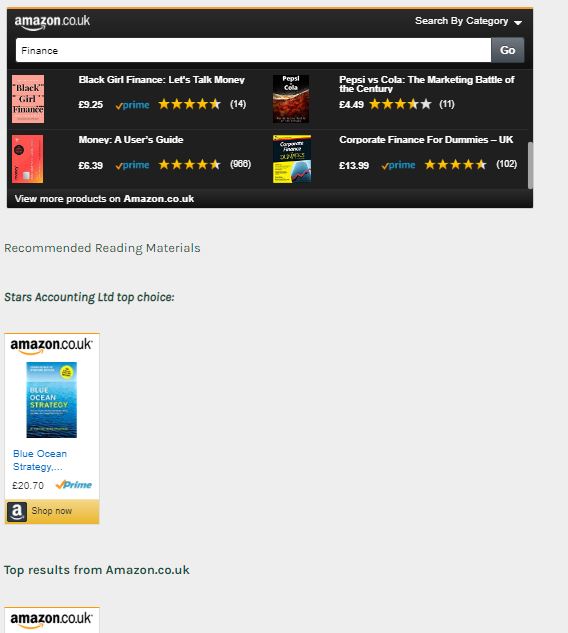
Here we have an Amazon search function that links directly to finance related literature.
We also list a number of books which we particularly enjoy.
Our top choice is currently ‘Blue Ocean Strategy’.
Do click the link and see if anything takes your fancy, or if there is a specific book you would like to see contact us and we’ll see if we can promote it for you.
Xero payroll in Sawbridgeworth should be the quietest part of running a business. Staff get paid the right amount on the right day, HMRC hears about it on time, and the pension contributions land where they should. When any one of those slips, it stops being quiet very quickly: an unhappy employee, a letter from HMRC, or a pension provider chasing missing contributions.
Stars Accounting is a Xero Certified Partner based in Sawbridgeworth. We run payroll in Xero for limited company directors, sole traders with staff and small employers across Sawbridgeworth and the surrounding towns.
What every payday involves
Each pay run has to do more than calculate wages. Under PAYE, employers report pay and deductions to HMRC through a Full Payment Submission (FPS) on or before each payday. That submission is the record HMRC uses for your employees’ tax and National Insurance, so a late or wrong FPS creates problems for them as well as for you.
Most employers also have to enrol eligible staff into a workplace pension and pay contributions on time. New starters, leavers, sick pay, holiday pay and tax code changes all need handling as they happen, not at the year end.
How we run your payroll in Xero
Set-up or move across. We set up Xero Payroll for a new employer, or move an existing payroll across from another system or provider with employee records, year-to-date figures and pension details carried over.
Every pay run. We process the pay run, calculate PAYE, National Insurance and pension contributions, and send the FPS to HMRC on time.
Payslips and pensions. Employees get their payslips, and pension contributions are reported to your provider.
Starters, leavers and changes. New starters, leavers and changes to pay are dealt with in the pay run they belong to.
Year end. Final submissions and P60s for your employees are completed at the tax year end.
Because payroll runs in the same Xero file as your accounts, wages and employer costs post straight into your books. Your profit figures stay current, and there is no separate payroll report to reconcile at the year end.
What you get back
Time: payroll stops being a monthly job for you or your office manager.
Certainty: HMRC submissions and pension contributions go in on time, every pay run.
One set of numbers: payroll and accounts in the same Xero file.